On reading books
I grew up in a house stuffed full of books, with no television, and electricity for only an hour or two per day (while the generator was running). There were shelves full of old science fiction (Asimov and Heinlein), as well as books on history, some good old fantasy, and other smatterings collected from second-hand bookstores over the years.
My mother read to us each night when we were children, starting with Dr Seuss, all the way to Harry Potter, where she did the spooky voices during the Voldemort scenes, which had me walking up and down the room with my fingers in my ears, humming to myself, until the scary parts were over. Naturally, this led to me reading a lot as a teenager and young adult. Up until I left home at 18, I would fall asleep each night reading by candlelight, which sounds very romantic and, in hindsight, definitely contributed to good sleep growing up.
At university, I read substantially less. I suddenly had a computer in my room, reliable electricity, and downloaded series to watch. I never stopped reading, but certainly felt my attention span erode as a result (I also think Family Guy circa 2012 rotted my brain irreparably).
As you can probably tell by now, I love reading books. It's my favourite form of media, by far, and I finish around a book a week. This may sound like a lot, but it translates into about an hour of reading per day—the length of a modern series episode, and while I'm not keeping count, the books I've read over the past year have really stacked up.
Reading does something that other forms of media, by their nature, can't do: it allows the reader to see the world through the lens of the author and their characters, creating empathy, where they not only see the actions taken (such as in film), but also understand their perspectives, motivations, thoughts, and feelings. I find that my thinking is generally influenced by whatever I'm reading at the moment. When I'm reading Pratchett, I see the world with some tongue-in-cheek whimsy. Conversely, when reading Hugh Howey, I'm more cynical about the machinations of the societal elite and technological advancement.
Reading books is also a fickle activity, as it requires activation energy and a decent attention span, both of which are eroded by the media landscape today. I've found that, since deleting my YouTube algorithm over a year ago, I have had a lot more time and energy for reading, and I'm grateful for making that choice.
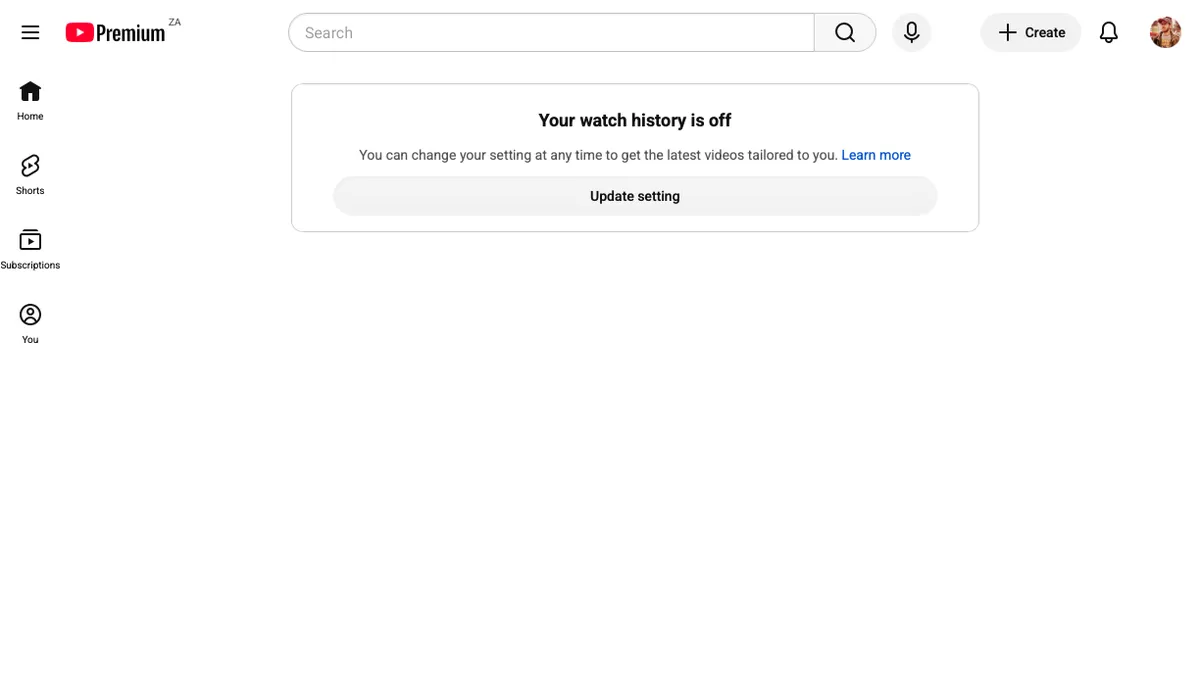
My YouTube home page
Much ink has been spilled about the decline of reading and literacy and how we're becoming a post-literate society, so I'll only touch on it lightly: the main reason for this decline is access to higher-calorie entertainment with lower nutrient density—mostly short-form video. This really started with television in the 1960s, yet only became an intellectual crisis in the past two decades thanks to Netflix and YouTube. It was surprising to learn that blue-collar workers in the ’50s had better literacy than college-educated adults today, and has gotten to the point where some governments have proposed paying people to read. This is well documented in Amusing Ourselves to Death (1985) by Neil Postman, which is worth reading.
This year, I have been re-reading the Discworld books by Terry Pratchett—possibly my favourite author and an all-round interesting person. If I could have dinner with any historical figure, it would be this man. He possesses a way of looking at the world, alongside a delightfully descriptive and witty style, that I can only stand in awe of. I've also read a handful of non-fiction books, as well as Wool, which I believe has been made into an Apple TV series named Silo.
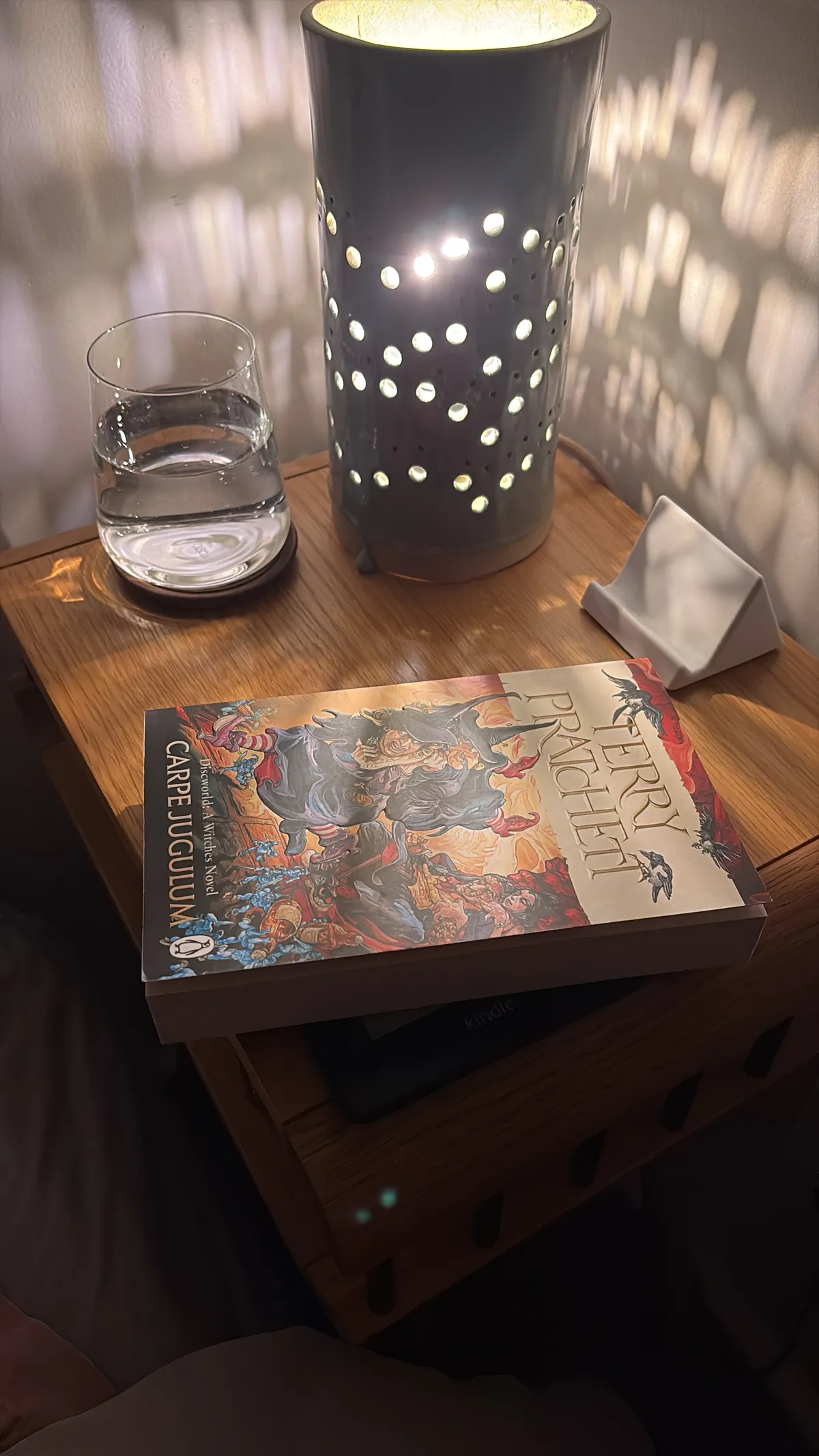
My bedside table for most of this year (featuring a lamp made by Emma)
I received a bookstore voucher from some friends for my 34th birthday and have decided to get into the classics with Frankenstein by Mary Shelley (I feel this is a relevant book at the moment, as humans are currently creating a monster of our own that may escape our control) and Crime and Punishment by Dostoyevsky, which is arguably one of the most important pieces of historical literature.
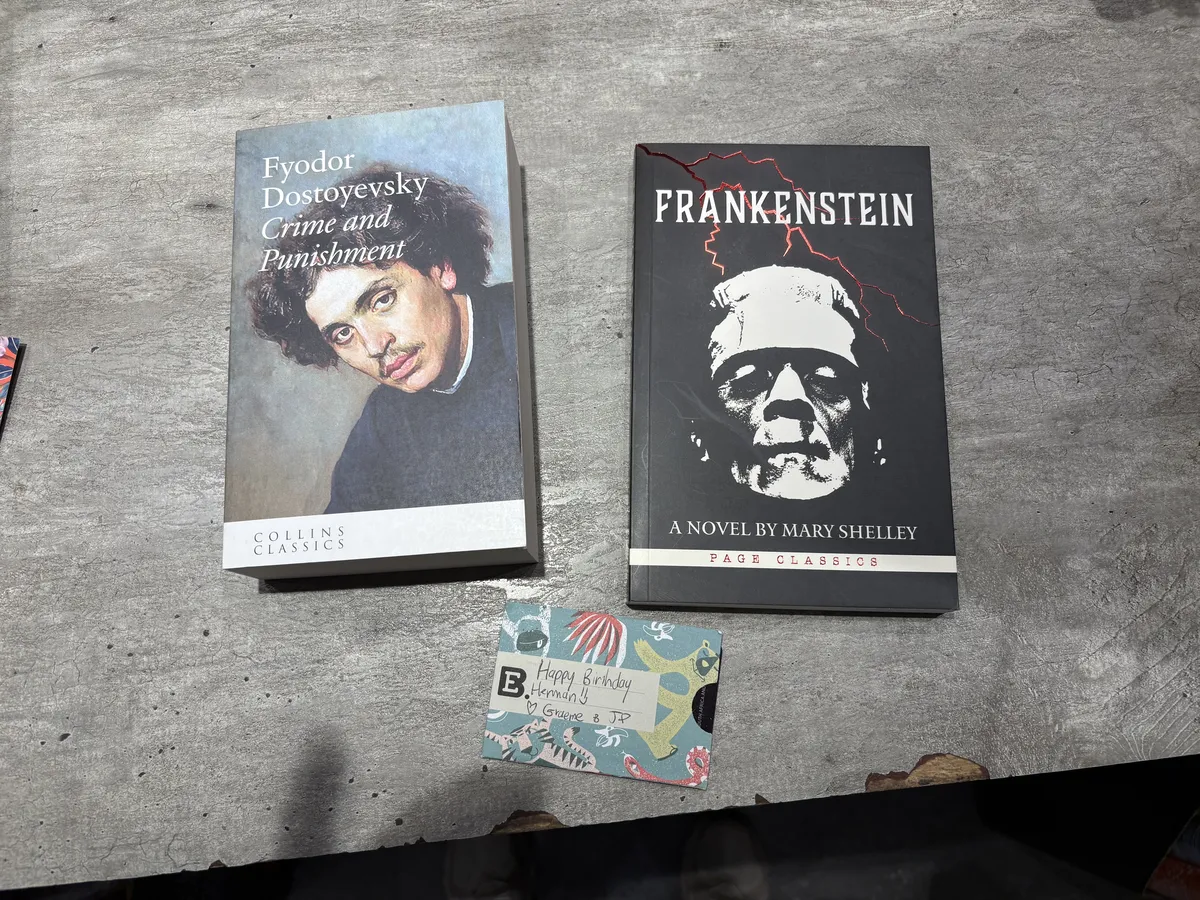
Thanks, Graeme and JP!
Reading never leaves you; it just becomes buried by other things. I no longer need to read by candlelight, but I still fall asleep every night with a book. If you haven't read for a while, I encourage you to block out some time, forgo an episode of the series you're currently watching, and settle down with a good book. It could be a classic you've always meant to read, or an old favourite you'd like to revisit. You don't need to finish a book a week; a few pages before bed are a perfectly good place to start. Email me if you'd like some recommendations (though there's a fair chance I'll suggest something by Pratchett).